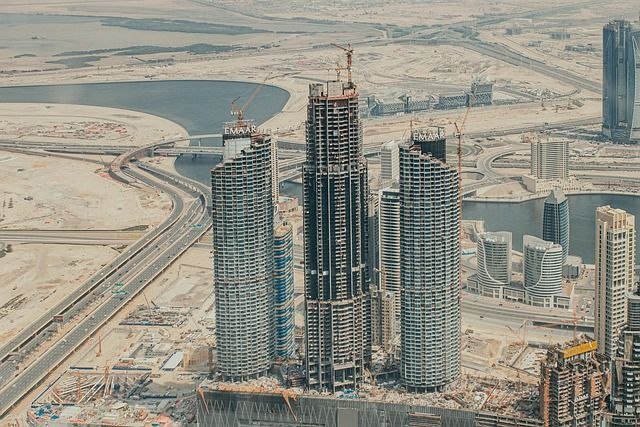
Dubai’s skyline is synonymous with ambition. From record-breaking skyscrapers to cutting- edge infrastructure, the city continues to redefine what’s possible in urban development. As we approach the end of 2025 and look ahead to 2026 and beyond, the emirate’s construction sector is experiencing remarkable momentum. In this blog post, we explore the most
significant developments, regulatory transformations, and industry trends shaping Dubai’s construction landscape today.
A Booming Construction Market
Dubai’s construction industry is thriving. Recent data from Dubai Municipality shows a 20 % surge in building permits in the first half of 2025 compared with the same period last year, with more than 30,000 permits issued and over 5.5 million square metres of built-up area
approved for immediate execution. Residential villas made up 40 % of these projects, while multi-story commercial developments accounted for 45 %, signaling robust demand across sectors.
This surge in construction activity reflects strong investor confidence and an ongoing expansion of Dubai’s real estate, commercial, and industrial sectors. With global
infrastructure funds increasingly eyeing the region, the city is poised to sustain this growth
well into the next decade.
Landmark Mega Projects Taking Shape
Dubai’s ambition is evident in its mega projects. One of the most transformative undertakings is the Dubai Metro Blue Line, a major expansion of the city’s public transport network. The Blue Line has already reached around 12 % completion and remains on track for a 2029 launch. Once operational, it will add approximately 30 km to the metro network, linking key
districts such as Dubai International City, Dubai Silicon Oasis, and Dubai Creek Harbor.
In addition to transport, large-scale urban development continues to make headlines. The
Infinity Bridge—a striking new crossing over Dubai Creek—opened in 2025, easing traffic flow and enhancing connectivity between Bur Dubai and Deira. Meanwhile, Palm Jebel Ali is returning to life with major infrastructure contracts worth Dh750 million awarded to support the island’s expansion into a waterfront destination.
These projects don’t just reshape the skyline: they enhance mobility, support tourism, and unlock economic opportunities for residents and investors alike.
Regulatory Reforms: A New Era for Construction
Dubai isn’t just building physical structures—it’s also building a modern regulatory framework to support sustainable and transparent growth. One of the most significant recent
developments is Dubai Law No. 7 of 2025, which regulates contracting activities across the emirate. Effective from January 2026, this law introduces digital registration, clearer
contractor classification, and standardized oversight for all construction firms, including those in free zones.
Alongside this, the city is updating its contractor performance evaluation system to promote accountability, quality, and professionalism in the industry. Agencies like Trakhees are also
reinforcing compliance through tens of thousands of site and building inspections, ensuring urban growth is safe and sustainable.
These reforms are more than bureaucratic updates; they’re a foundation for higher standards, better risk management, and greater international competitiveness.
Digital Innovation and Industry Trends
Dubai’s construction market isn’t just growing—it’s transforming. Across the UAE and globally, digital and smart technologies are reshaping how projects are planned and executed. Tools
such as Building Information Modeling (BIM), predictive analytics, and AI-driven construction
platforms are enabling more efficient collaboration, cost control, and risk mitigation.
Events like the Digital Construction Summit 2025 underscore how artificial intelligence is becoming a central theme in the industry, from project planning to on-site automation.
Additionally, trends like modular and prefabricated construction, sustainable building
practices, and smart system integrations are gaining traction. Green building certifications and net-zero initiatives are moving from niche considerations to core project requirements, aligning with the UAE’s broader sustainability goals.
Real Estate Developments & Market Dynamics
Dubai’s construction boom is mirrored in its real estate market. Over 61,800 units are under construction in 2025, as the emirate continues to attract homebuyers, investors, and
multinational corporations.
High-profile residential launches—such as the newly unveiled STAX luxury twin towers in Jumeirah Village Circle—are drawing significant attention, even featuring celebrity
appearances at launch events. These developments reflect the city’s diversification beyond traditional commercial hubs and into lifestyle-oriented communities.
Meanwhile, innovative financing tools such as fully digital mortgage platforms are simplifying the home-buying process, further stimulating demand in the housing sector.
Infrastructure and Roads: Smoother Rides Ahead
Dubai’s construction story is not limited to buildings. The Roads and Transport Authority (RTA) has embarked on more than 50 major road projects to ease traffic and enhance
connectivity. From Hessa Street upgrades to expanded corridor routes that will benefit hundreds of thousands of drivers, these works are crucial to supporting the city’s rapid population growth and urban expansion.
Projects like the Al Shindagha Corridor bridge work further augment the city’s modern transport network, linking historic districts with developing urban zones.
Looking Forward: A Vision of Sustainable Growth
As Dubai’s construction landscape evolves, one thing is clear: momentum isn’t slowing down. With policy reforms, technological integration, and some of the Middle East’s most ambitious projects underway, the emirate is positioning itself as a global leader in construction
innovation and urban planning.
For construction companies operating in Dubai, these trends represent both challenges and opportunities. Embracing digital transformation, adhering to emerging regulatory standards, and focusing on sustainability will be key to success in this dynamic environment.